Stochastic Processes
on Networks
Exploring modern mathematical paradigms of diffusion, random walks, percolation, and dynamic processes running across physical and computational networks.
Date & Venue
Aug 2: LC 202, Lecture Hall Complex
Aug 3: Lecture Hall 22, VMCC
Distinguished Lecturers
Ayalvadi Ganesh & Vsevolod Shneer
Coding Challenge
SPoN Vibe (Teams of 2)

Understanding SPoN 2026
Networks constitute the backbone of modern structural representations, ranging from neural systems and social platforms to power grids and epidemic pathways. The SPoN workshop addresses how system dynamics behave over these topologies.
Day 1 Focus: Pedagogy & Foundational Lectures covering rumour spreading and first passage percolation
Day 2 Focus: Research talks showcasing leading findings on various aspects of stochastic processes and networks.
Coordinated Vibe: Hands-on team coding event where participants implement networks with rapid code development loops.
0
Network Nodes
0
Edges (Connections)
0
Stochastic Particles
0%
Infected Nodes
Distinguished Lecturers
Get to know the leading academics delivering deep-dive lectures on Day 1.
Ayalvadi Ganesh
University of Bristol
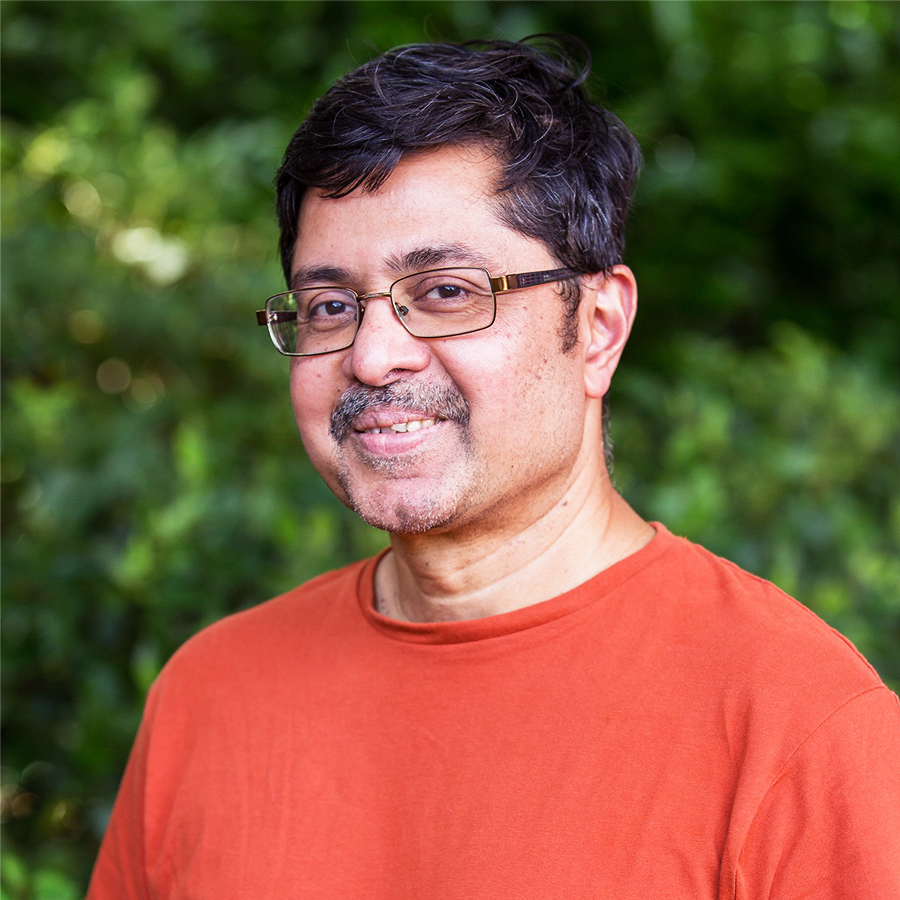
Lecture Title: Rumour spreading on networks
Lecture 1: Rumour spreading on the complete graph: A continuous-time rumour spreading model. Analysis of the mean rumour spreading time, and bounds on the fluctuations.
Lecture 2: Bounds on the rumour spreading time on general graphs, both static and dynamic.
Lecture 3: Steiner trees in the stochastic mean-field model of distance.
Biography
Ayalvadi Ganesh received his BTech in EE from IIT Madras in 1988, MS and PhD in EE from Cornell University in 1991 and 1995 respectively. His Ph.D. thesis was on the use of large deviation techniques in queueing theory. He was with Edinburgh University, Birkbeck College, London, U.K., and Hewlett-Packards Basic Research Institute in Mathematical Sciences (BRIMS) and Microsoft Research before joining the Mathematics Department of Bristol University. He was also a Fellow of Kings College, Cambridge, from 2000 to 2004.
He has published extensively on Queueing Theory and Large Deviations, Bayes' Asymptotics, Economics of Communication Networks, Peer-to-peer Systems and Algorithms, Random graphs and stochastic processes on graphs, and Computer Viruses and Worms. He is the coauthor, with Neil O'Connell and Damon Wischik, of the Springer Book "Big Queues" published in 2004.
His research interests are in the mathematical modelling of communication and computer networks, and in decentralised algorithms for such networks. Specific interests include large deviations and applications to queueing theory and statistics, random graph models and stochastic processes on graphs, and decentralised algorithms for resource allocation in the Internet and in wireless networks. He won the INFORMS Best Publication Award in 2005 and the ACM Sigmetrics Best Paper Prize in 2010.
Vsevolod (Seva) Shneer
Heriot-Watt University
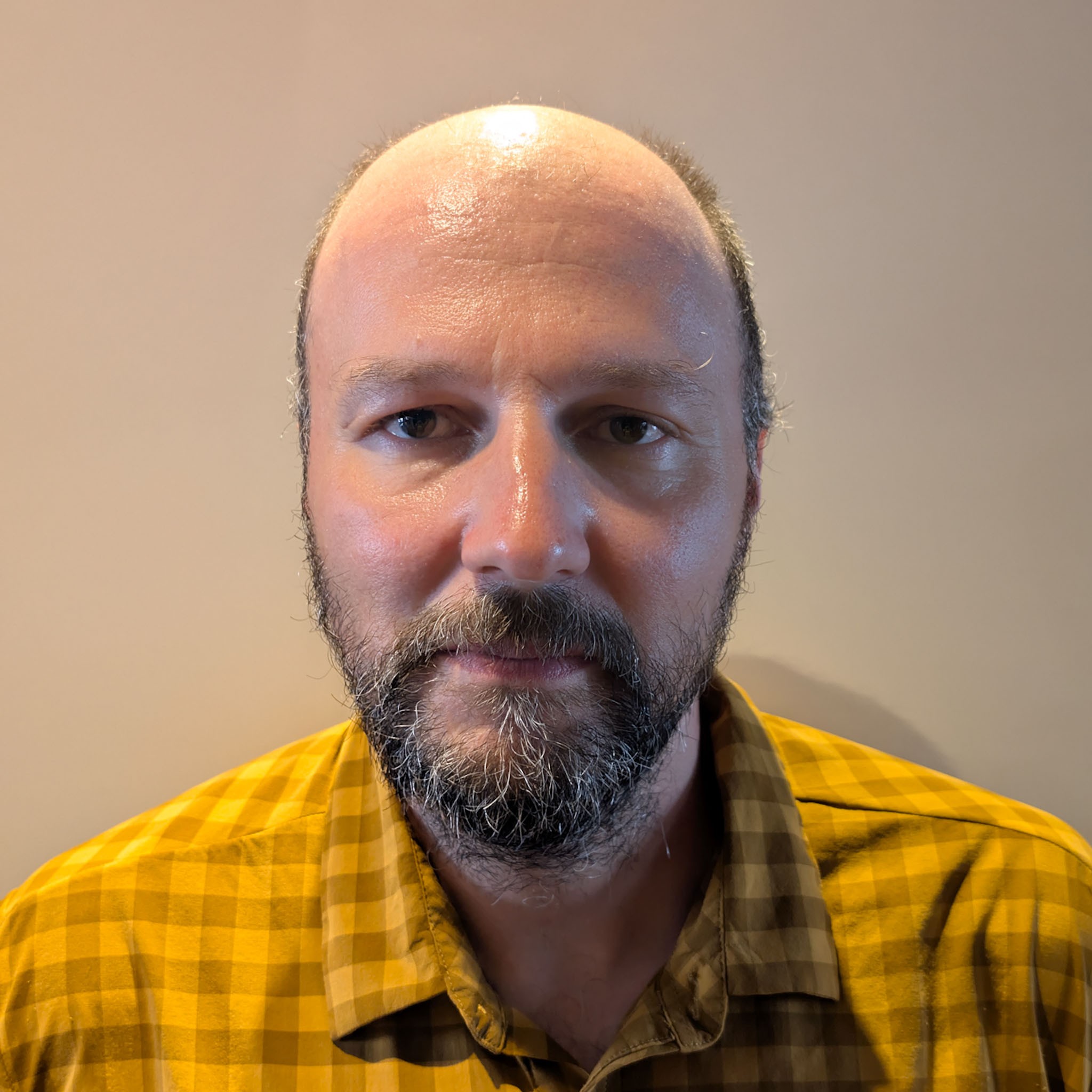
Lecture Title: First passage percolation
Lecture Description: We will start by discussing first-passage percolation in general and on an Erdős-Rényi random graph in particular. The lectures will then focus on the tools needed to study this problem, including branching processes and their related martingales. Lecture 3 will be a research talk on Migration-Contagion processes.
Lecture 3 Abstract
We consider the following migration process based on a closed network of N queues with K_N customers. Each station is a M/∞ queue with service (or migration) rate μ. Upon departure, a customer is routed independently and uniformly at random to another station. In addition to migration, these customers are subject to an SIS (Susceptible, Infected, Susceptible) dynamics. That is, customers are in one of two states: I for infected, or S for susceptible. Customers can only swap their state either from I to S or from S to I in stations. More precisely, at any station, each susceptible customer becomes infected with the instantaneous rate αY if there are Y infected customers in the station, whereas each infected customer recovers and becomes susceptible with rate β. We let N tend to infinity and assume that lim_{N→∞} K_N/N = η := λ/μ, where η is a positive constant representing the customer density. The main question of interest is about the set of parameters of such a system for which there exists a stationary regime where the epidemic survives in the limiting system. The latter limit will be referred to as the thermodynamic limit. We establish several structural properties (monotonicity and convexity) of the system, which allow us to give the structure of the phase transition diagram of this thermodynamic limit w.r.t. η. The analysis of this SIS model reduces to that of a wave-type PDE for which we found no explicit solution. This plain SIS model is one among several companion stochastic processes that exhibit both migration and contagion. We discuss two of them as they provide variants to the plain SIS model as well as some bounds. These two variants are the SIS-DOCS (Departure On Change of State) and the SIS-AIR (Averaged Infection Rate), which both admit closed form solutions. The SIS-AIR system is a classical mean-field model where the infection mechanism based on the actual population of infected customers is replaced by a mechanism based on some empirical average of the number of infected customers in all stations. The latter admits a product-form solution. SIS-DOCS features accelerated migration in that each change of SIS state implies an immediate departure. This model leads to another wave-type PDE that admits a closed form solution. Our main focus is on the closed systems and their limits. The open systems consisting of a single station with Poisson input are instrumental in the analysis of the thermodynamic limits and are also of independent interest.
This is a joint work with F. Baccelli and S. Foss.
Biography
Seva is an Associate Professor at the Department of Actuarial Mathematics and Statistics at Heriot-Watt University, part of the Maxwell Institute.
Seva obtained his PhD in 2006 from Heriot-Watt University, winning the Macfarlane prize for the best thesis of the year. He then held a postdoctoral position at EURANDOM, followed by an Assistant Professor position at the Technical University of Eindhoven. He spent 6 months as a Senior Researcher at EPFL, Lausanne, before joining Heriot-Watt as a member of staff in 2010.
Seva's research is in both pure and applied probability. His main research interests may be described as mainly in
- random graphs and random processes on them
- probabilities of rare events, especially with heavy tails
- stability of stochastic processes
- stochastic models for spread of epidemics
Workshop Schedule
Both days of foundational series lectures & research presentations at a glance.
Day 1 · Sunday, Aug 2, 2026 @ LC 202, Lecture Hall Complex
Day 2 · Monday, Aug 3, 2026 @ Lecture Hall 22, VMCC
Research Speakers & Abstracts
Click on any researcher to view their talk titles, abstracts, and biographical summaries (TBA).
PP Parimal Parag
Indian Institute of Science (IISc)
Parimal Parag
Indian Institute of Science (IISc)
Talk Title
Bipartite matching under communication constraints
Abstract
Data centre networks require new transport protocols in view of the large bandwidth and low RTT in the network together with strict latency requirement for distributed compute. Low latency can be achieved by stall free scheduling between a sender receiver pair to ensure minimal buffering at the intermediate switches. The main technical challenge in such protocols is to establish large number of matched sender receiver pairs for concurrent message transfer. We propose a novel distributed bipartite matching algorithm with local information that improves the mean matching size in random bipartite graphs that model the data centre network communication.
Biography
Parimal Parag is currently an associate professor in the Department of Electrical Communication Engineering at the Indian Institute of Science, Bangalore.
He previously worked as a senior systems engineer in R&D at ASSIA Inc. from October 2011 to November 2014, and he received his B.Tech. and M.Tech. degrees from IIT Madras and his PhD from Texas A&M University.
He has also held research positions at Stanford University and Los Alamos National Laboratory.
His research interests span the design, performance evaluation, and control of large distributed and networked intelligent systems using tools from queueing theory, information theory, coding theory, and optimization.
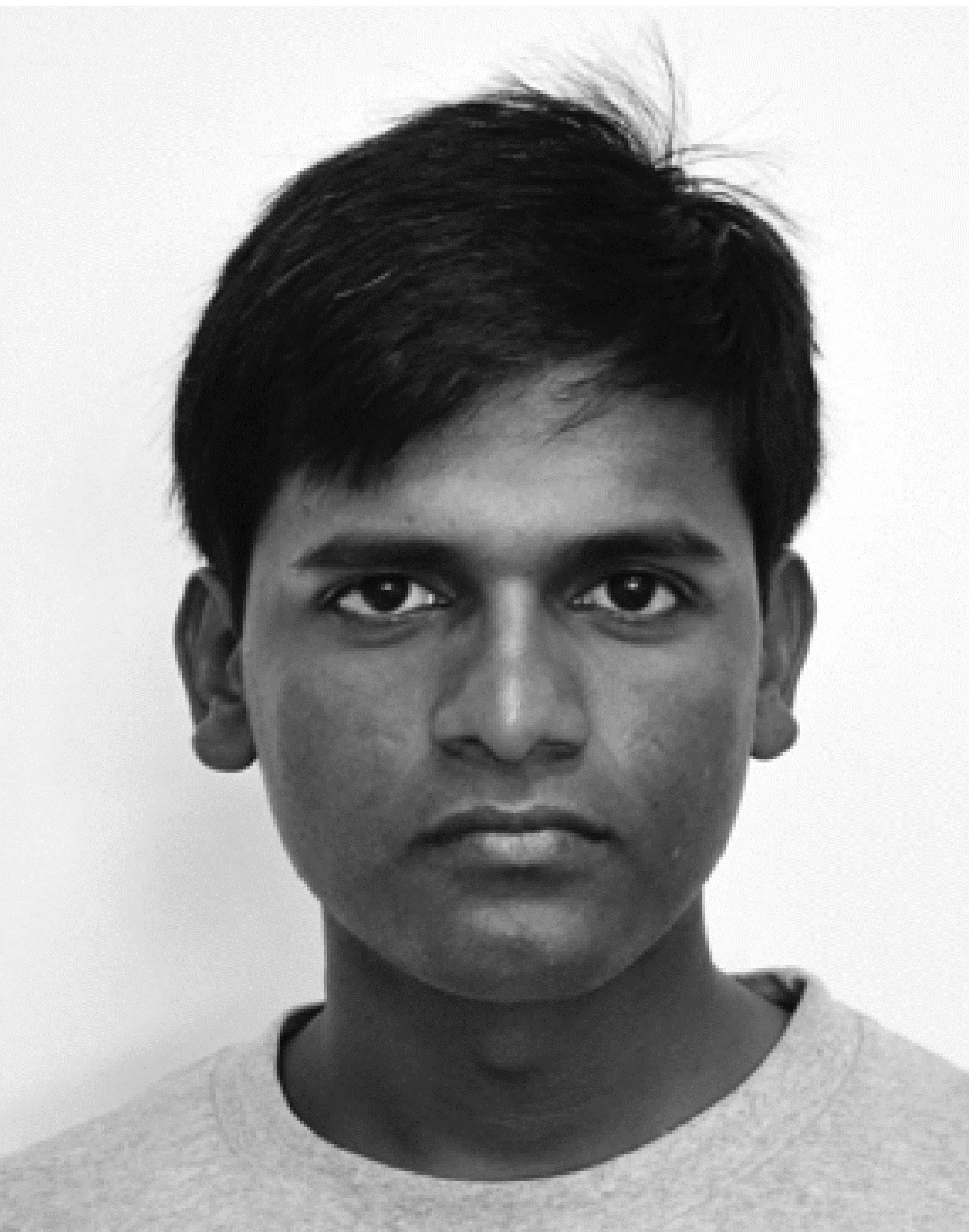
KK Kesav Krishnan
IIT Madras
Kesav Krishnan
IIT Madras
Talk Title
On Uniformly Sampled Integer valued Lipschitz Functions on regular Trees
Abstract
The problem of studying uniformly sampled Lipschitz functions on graphs, i.e. functions whose values differ by at most 1 at adjacent sites with prescribed boundary conditions, has attracted a great deal of interest recently in both the probability and combinatorics communities. In particular, one seeks to establish limiting properties for such functions on families of graphs that grow. On trees and certain expanders, it is known that the value of a randomly sampled function at the root is tight, that is the corresponding sequence of probability measures on the integer line concentrate on a given compact set. In the case of regular trees, we are able to go one step further, and explicitly characterize when the distribution of this random variable converges. In particular convergence holds if and only if the branching number is strictly less than 8. When the branching number is greater than or equal to 8, we demonstrate how the non convergence follows from an alternating pattern which holds with high probability, thus verifying a form of long range order.
Biography
Kesav obtained his PhD in Mathematics at University of Illinois at Urbana Champaign, followed by a PIMS Postdoctoral Fellowship at the University of Victoria, Canada. He is currently an Assistant Professor at IIT Madras, specialising in Probability and Mathematical Physics.
Speaker image placeholder
Replace with a photo when available.
NS Neeraja Sahasrabudhe
IISER Mohali
Neeraja Sahasrabudhe
IISER Mohali
Talk Title
Memory Tampered Elephant Random Walk
Abstract
The Elephant Random Walk (ERW), introduced by Schütz and Trimper in 2004, is a memory-based random walk in which the next step depends on its entire past history. In this talk, we introduce a variation of the classical ERW obtained by tampering with the memory. At any time \( n > 1 \), the tampered-memory ERW evolves as a classical ERW when the uniformly chosen memory index lies in a prescribed subset \( D_{n-1} \subset \{1, \dots, n - 1\} \), but follows a different update rule when the index belongs to its complement.
Our aim is to understand how much memory is enough to observe an ERW-like behaviour. We discuss limit theorems for this model and show how the asymptotic behaviour of the walk depends on the size and structure of the sets \( D_n \). In particular, we illustrate that in order to obtain a phase transition, the size of \( D_n^c \) needs to be more than half the entire memory. This talk is based on joint work with Dr. Debleena Thacker and Vinita Mulay.
Biography
Neeraja Sahasrabudhe is an Assistant Professor at the Department of Mathematical Sciences of Indian Institute of Science Education and Research Mohali. Prior to joining IISER Mohali, she spent a few years at the Indian Statistical Institute as a visiting scientist and at Indian Institute of Technology Bombay as a postdoctoral researcher. Her work focuses on reinforcement driven stochastic processes, including interacting urn processes, random walks with memory, random graphs and opinion dynamics.

MP Moumanti Podder
IISER Pune
Moumanti Podder
IISER Pune
Talk Title
A model of opinion dynamics on an evolving network bearing close ties with the elephant random walk
Abstract
We consider a stochastic process which consists of a directed graph on \( n \) labeled vertices, namely \( v_{1},\ldots,v_{n} \), at the end of epoch \( n \), wherein each \( v_{i} \) is endowed with an opinion \( X_{i} \) that is either \( +1 \) or \( -1 \). At the beginning of epoch \( n+1 \), a new vertex, \( v_{n+1} \), is introduced, which then draws a sample (whose size may vary with \( n \) or remain fixed), with replacement, from the past vertices, wherein each vertex \( v_{i} \), for \( i\in[n] \), is chosen with probability proportional to the number of times it was sampled, and agreed with, earlier. The vertex \( v_{n+1} \) adopts opinion \( X_{n+1}=+1 \) with probability \( p f(P_{n}/k)+(1-p)\{1-f(P_{n}/k)\} \), where \( p\in[0,1]\setminus\{1/2\} \) is the memory parameter, \( f:[0,1]\rightarrow[0,1] \) is the reinforcement function, and \( P_{n} \) indicates the number of vertices with opinion \( +1 \) that appear in the sample (counting repetitions). We establish almost sure convergence results, as well as a functional central limit theorem, for suitably scaled iterates arising from this model.
Biography
TBA.
Speaker image placeholder
Replace with a photo when available.
JN Jayakrishnan Nair
IIT Bombay
Jayakrishnan Nair
IIT Bombay
Talk Title
Which Model to Train? A Budgeted Bandit Approach to Adaptive Fine-Tuning
Abstract
Given a basket of large language models (LLMs), a certain task of interest (e.g., text summarization), and a finite computational/monetary budget B, we address the problem of generating the optimally fine-tuned model for the task. The challenge here is that the learning curves of the different models are a priori unknown, meaning the most suitable base-LLM (the one that would achieve the best performance post fine-tuning using the budget B) must be learnt via exploration. We formulate this scenario as a non-stationary multi-armed bandit (MAB), seeking to minimize the pseudo regret, which captures the difference in quality between the fine-tuned model output by the algorithm, and that produced by an oracle that knows the learning curves a priori. We derive lower bounds on the pseudo regret under any algorithm, propose algorithms that match the lower bound up to multiplicative factors, and validate the algorithms extensively against real-world fine-tuning datasets. This work was done jointly with Sarvesh Gharat, Utkarsh Chavan and Nikhil Karamchandani.
Biography
Jayakrishnan Nair is a Professor in the department of Electrical Engineering at IIT Bombay. His research focuses on modeling, performance evaluation, and design issues in online learning, queueing systems and communication networks, drawing on tools from stochastic modelling, queueing theory, game theory, optimization, and control theory.
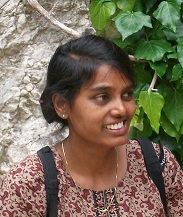
VK Veeraruna Kavitha
IIT Bombay
Veeraruna Kavitha
IIT Bombay
Talk Title
Random fixed points, systemic risk and resilience of heterogeneous financial network
Abstract
We consider a large random network, in which the performance of a node depends upon that of its neighbours and some external random influence factors. This results in random vector valued fixed-point (FP) equations in large dimensional spaces, and our aim is to study their almost-sure solutions. An underlying directed random graph defines the connections between various components of the FP equations. Existence of an edge between nodes i,j implies the i-th FP equation depends on the j-th component. We consider a special case where any component of the FP equation depends upon an appropriate aggregate of that of the random `neighbour' components. We obtain finite-dimensional limit FP equations in a much smaller dimensional space, whose solutions aid to approximate the solution of FP equations for almost all realizations, as the number of nodes increases. We use Maximum theorem for non-compact sets to prove this convergence. We apply the results to study systemic risk in an example financial network with large number of heterogeneous entities. We utilized the simplified limit system to analyse trends of default probability (probability that an entity fails to clear its liabilities) and expected surplus (expected-revenue after clearing liabilities) with varying degrees of interconnections between two diverse groups. We illustrated the accuracy of the approximation using exhaustive Monte-Carlo simulations. Our approach can be utilized for a variety of financial networks (and others); the developed methodology provides approximate small-dimensional solutions to large-dimensional FP equations that represent the clearing vectors in case of financial networks.
Biography
TBA.
VK Parthanil Roy
IIT Bombay
Parthanil Roy
IIT Bombay
Talk Title
Phase Transition for Elephant Random Walks with Two Memory Channels
Abstract
Random processes with strong memory arise naturally in various disciplines including physics, economics, biology, geology, etc. Memory can be multifaceted and can arise due to interactions of more than one underlying phenomena. Many of these processes exhibit superdiffusive growth due to the effect of memory. A class of one-dimensional, discrete-time such models called “random walk with m memory channels” was introduced and discussed in a recent paper on statistical physics by Saha (2022). In these models, the information of m independently chosen steps from the walker’s entire history is needed to decide the future step. The aforementioned work carried out heuristic calculations of variance, and conjectured phase transitions from diffusive to superdiffusive and from superdiffusive to ballistic regimes in the m=2 case. We have proved these conjectures rigorously (with mild corrections), and discovered a new regime at one of the transition boundaries. These results will be presented along with several open problems. (This talk is based on a joint work with Krishanu Maulik and Tamojit Sadhukhan.)
Biography
Parthanil Roy is a professor in the Department of Mathematics, IIT Bombay. He obtained his PhD (2007) from Cornell University on Stable Random Fields. He was a postdoctoral fellow (2007-2008) at the RiskLab, ETH Zurich and an assistant professor (2008-2011) at Michigan State University before joining Indian Statistical Institute (2011-2024), from where he moved to IIT Bombay in December 2024. Prof. Roy’s research focuses on the interplay between probability theory and dynamical systems in the context of heavy tails, stable processes and long range dependence. He has also worked on branching random walks and random walks with memory. Prof. Roy is the recipient of numerous awards and accolades including SwarnaJayanti Fellowship (2019 - 2024) from the Department of Science and Technology of the Government of India, Young Statistical Scientist Award (in the Theory and Methods category in 2021) from the International Indian Statistical Association, Fellowship of Indian Academy of Sciences, etc. He is currently serving in the editorial boards of Statistical Science and Indian Journal of Pure and Applied Mathematics and also in the Advisory Board of Unicloud Research and Innovations Private Limited - India’s Deep-Tech Venture Studio for Research Commercialization. .
KPIT Vibe Coding Competition
Test your speed, algorithmic knowledge, and intuitive reasoning while "vibe coding" stochastic processes on networks in a competitive marathon. Craft unique simulations!
Team Composition
Exactly 2 members per team. Share planning, execution, and present together on Day 2.
The Prompt
Build a stochastic simulation/visualizer or make a video representing a stochastic process on a network. More details during the workshop.
Exciting Prizes
Prizes worth up to INR 15000 to be won.
Workshop FAQs
Essential information for attendees, students, and participants.
Who can attend SPoN 2026?
The lectures are tailored for graduate students, researchers, and advanced undergraduates interested in probability theory, operations research, computer science, and network physics.
Do I need to sign up for Vibe Coding separately?
Yes. The registration will be conducted during the workshop. You need to registed for the workshop in order to participate in the SPoN vibe coding competition. Workshop registration is free for IITB students and faculty and other invited individuals.
What background is required for lectures?
Basic probability (Markov chains, continuous-time processes) and rudimentary graph theory will help you extract the maximum learning value from the sessions.